THE CHRONICLE
Sept. 19, 2003
This is the third article in a series about the experiences of light-skinned African-Americans and the prejudices they face.
Billie Matthews, 70, and Stacie Lawrence, 17, have grown up generations apart. But the two share a trait – their light complexions – that generates the type of questions and curiosity that transcends the decades that separate them.
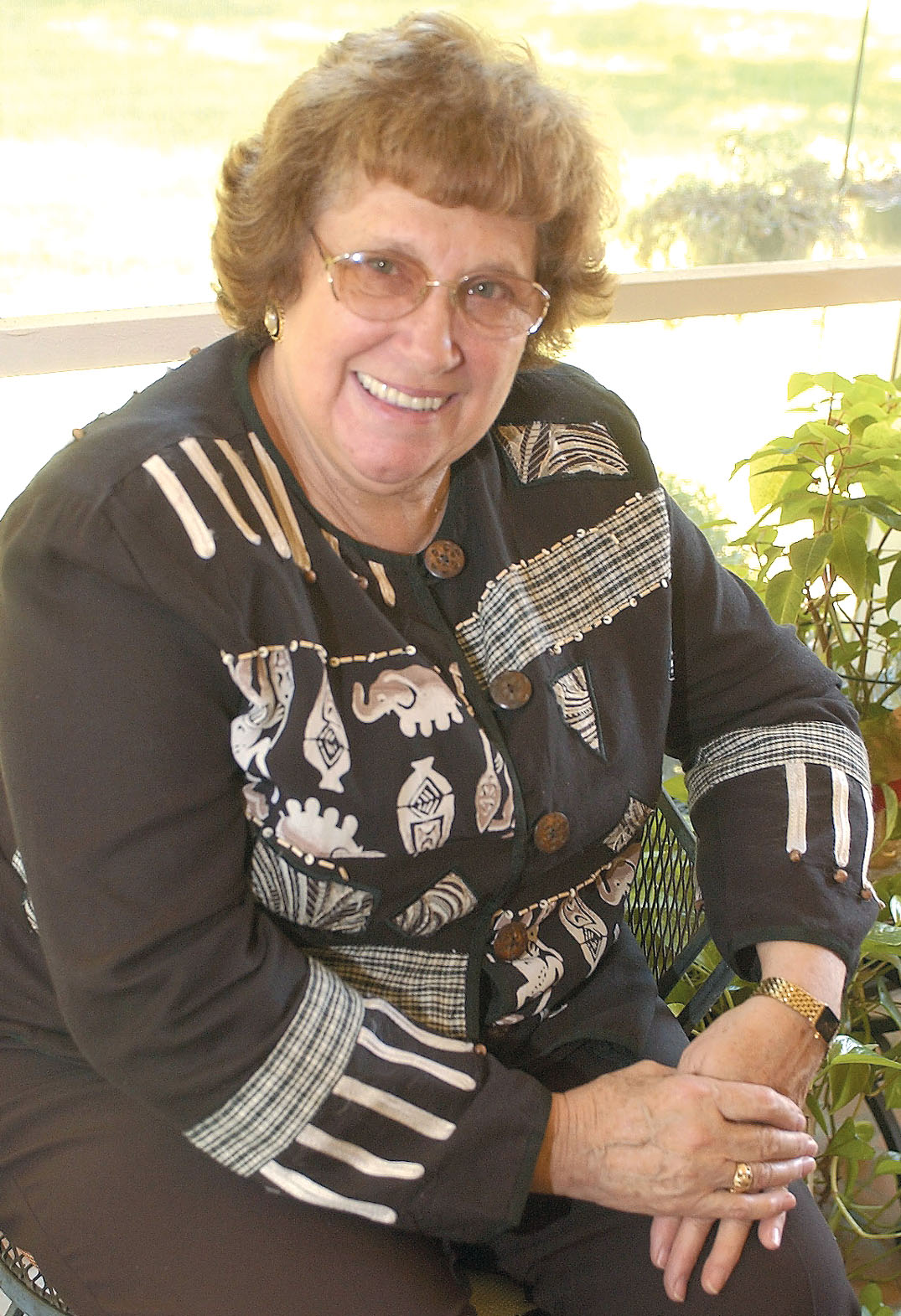 |
| Billie Matthews |
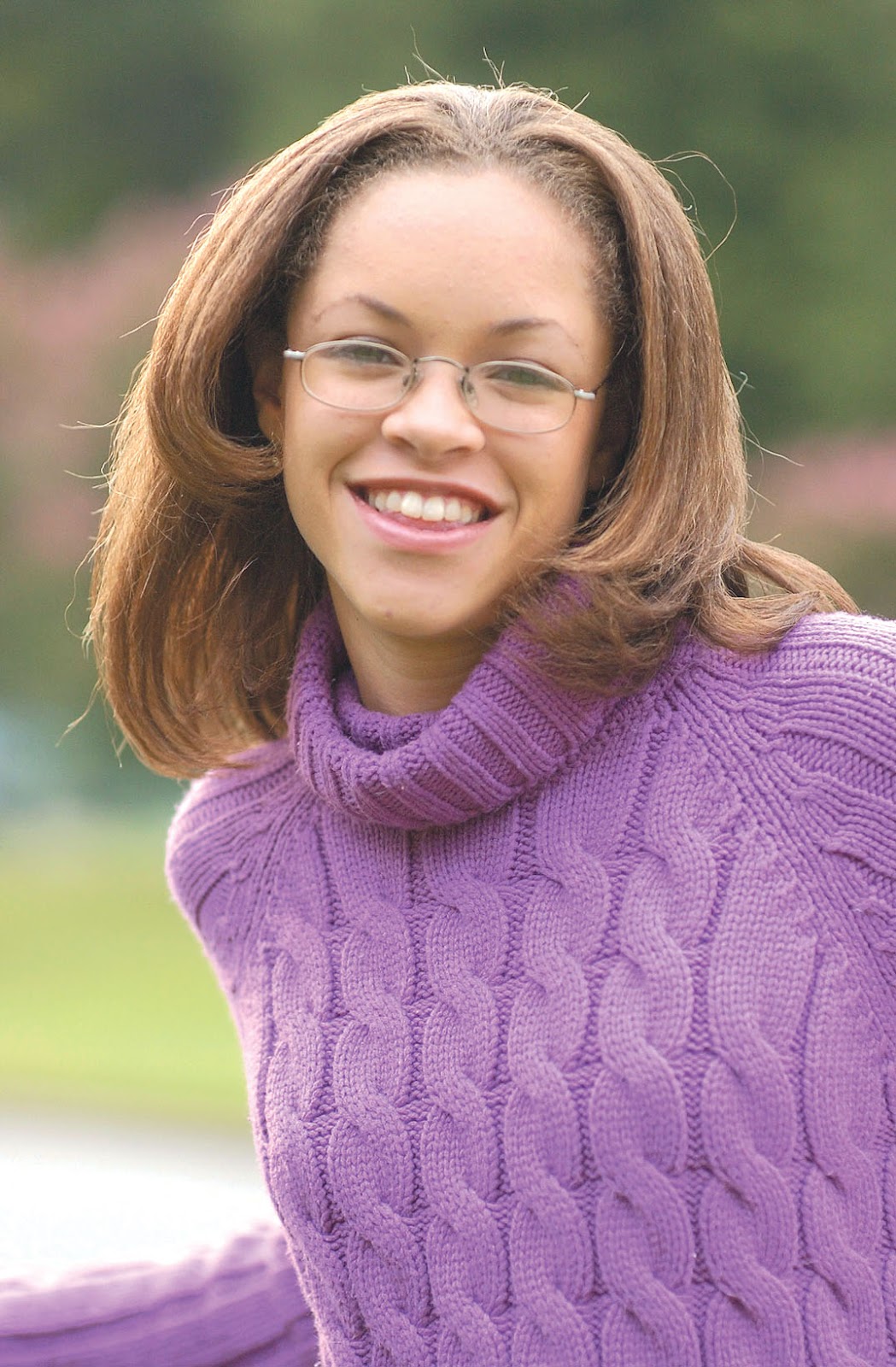 |
| Stacie Lawrence |
Matthews, a retired teacher originally from West Virginia, is frequently mistaken for white. Lawrence, a high school senior, born and raised in Winston-Salem, is often asked if she is biracial.
“I’m sure I have taught people who didn’t know I was black or white. They wouldn’t know, I’m sure,” said Matthews. “Life has been interesting.”
Named after her father, who affectionately called her by her full name – Billie Marie – Matthews said she received more grief about her name growing up than she did about her complexion. Both of her parents were light-skinned blacks. Flip through any photo album in Matthews’ home and you will see that most of her relatives are of a similar light complexion. The large extended family has been gathering for reunions almost on a yearly basis for decades now.
Although Matthews’ appearance gives no indication, as far back as she can remember, her family members have been black.
“My mom and my dad were both considered black. My mom’s mom and dad were Negro, as they said it back then. My dad’s mom and dad were Negro, and if I go back a little further their parents were Negro,” said Matthews.
For the most part, Matthews said that her experiences in school as a child were “wonderful.” The majority of the families in her hometown knew one another. They all lived, went to school and worked together. Any time someone would ridicule her about her complexion, she said, there was always someone who would come to her defense.
Even though Lawrence is a young person in a century and in a generation that are known for their racial tolerance and acceptance, Lawrence said her school years have not been as positive as Matthews’.
The Glenn High School student is all too familiar with being ridiculed about her complexion. She said the taunts she has endured since childhood have caused her to feel unattractive.
“Now I just blow the jokes off, but before, when I was younger, I took it to heart … As I grew up I had low self-esteem,” said Lawrence.
Her parents come from multiracial backgrounds, but both identify themselves as being black. Her mother – who is a mixture of white, black and Indian – is from Ahoskie. Lawrence’s father is black and Indian, and he is originally from Ohio. Lawrence said she inherited her mother’s fair complexion, but her older brother is darker.
“My mom tells me to just ignore other people. She’s really helped me a lot,” said Lawrence. “She always told me when I was little that nobody is going to stick up for you but you, so stand up for yourself.”
Earl Smith said that while blacks have been arguing over skin color differences, both blacks and whites are equally color conscious when it comes to matters of complexion. Smith is the chair of the sociology department at Wake Forest University.
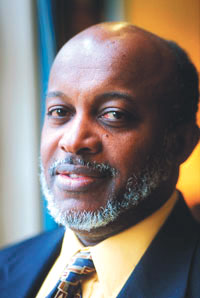 |
| Earl Smtih |
“Blacks have always been fighting over the issues of skin color, and I don’t think it’s something that’s new,” said Smith. “It grows out of the institution of slavery. It grows out of whites’ practice of miscegenation. Generation after generation we keep seeing that we’re thinking about the same things.”
Smith argued that a part of the institutional racial structure is the belief that white or light skin is associated with privilege in this country.
The isolated mining town where Matthews grew up was also home to many European immigrants who found work in the coal mines of West Virginia. Matthew said she never felt out of place because she grew up around Hungarians, Germans and Italians.
“There was no such thing as living across the tracks because everybody lived across the tracks,” said Matthews, whose father was a coal miner. “We all went to the same doctor and to the same church.”
Racial lines were not drawn as rigidly in her hometown as in other areas of the country. Matthews said that many blacks were able to move about freely despite the segregated times.
“We could always get on the bus and sit down anywhere. We never had to go to the back of the bus. In West Virginia, you didn’t (have to do that),” said Matthews. “I’ve seen that happen in other areas where they made somebody move to the back of the bus, and I thought that was ugly.”
Matthews and her two younger brothers spent many summers with their grandparents who lived in Wilkes County. Her grandmother who lived to be 103 years old, always taught her that the world is made up of different kinds of people.
“Even up in Wilkes County, most everybody up there was light-skinned, even the black folks. They never made a big issue about it,” said Matthews.
Both of her parents died young, and Matthews knew she could have made the decision to cross the color line and pass for white. But she chose not to.
“Passing” refers to blacks who are light-skinned but choose to live as white. This practice where blacks falsely assimilated into white culture became popular during and after the antebellum and postbellum periods and during the height of the Jim Crow laws era.
“I could have made a change, but I didn’t see the point in trying to be somebody I didn’t want to be. I wanted to be who I was,” said Matthews.
Matthews moved in with her grandparents and went on to graduate from Johnson C. Smith University. She said that her college experience, which brought few problems from her black peers, was very positive. While at Smith, she joined Delta Sigma Theta sorority at the urging of a cousin who was already a member of the sorority. Matthews recently attended a regional meeting of Deltas in Winston-Salem, where she was reacquainted with numerous sorority sisters. “We really did enjoy our years (at Smith),” said Matthews of herself and her college roommate, whom she lived with for four years. “The people who wanted to get to know you did, and those who didn’t went on their merry way.”
Dr. A.O. Steele was a religion instructor at Smith who taught Matthews. Smith remembers how Steele used to pray for “the white people, the red people, the yellow people, the brown people, the black people and all the shades in between.” That is a prayer that Matthews has kept with her since.
Matthews said she didn’t encounter many problems about her complexion until she moved to North Carolina. Her first job after college was teaching at Atkins High School in Winston-Salem. Matthews, accompanied by a fellow teacher, made a house call to meet with the parents of one of her students who was having problems in school. Upon arriving at the house, the mother, who was black, informed Matthews and her colleague that Matthews was too light to teach her son.
“I thought, ‘Am I going to be faced with this for the rest of my teaching career?’ That was the only occurrence that happened as far as anyone coming out and blatantly saying (something about her complexion),” Matthews said.
While teaching at Winston-Salem State University four years ago, Matthews remembers a student who asked to speak with her after class. Matthews assumed the student had a question about classwork, but she wanted to know whether Matthews was black or white.
“I looked at her and asked her, ‘What color do you really want me to be?’” said Matthews. “(The student) told me that I didn’t sound like a white person and that I didn’t walk like one either.”
After laughing about their conversation, Matthews told the girl that she appreciated the way she approached her about her appearance because she could tell the student was genuinely curious.
Lawrence said that many teachers over the years have been a huge comfort to her when classmates were mean. She said their vote of confidence in her really made all the difference when she felt different from other kids.
“I felt accepted growing up, but I knew I was different,” Lawrence said. “I am open to meet new people. I like people and I’m going to be nice to them because I’ve learned that everyone has feelings.”
Seventh grade was a particularly tough year for Lawrence, who remembers a classmate who used to harass her on a regular basis. “Whigger and white girl” were the usual insults the boy would spew at Lawrence, even though he wasn’t that much darker than she.
“I didn’t understand it when I was younger. I used to think, ‘Why are they calling me names?’ I have feelings too,” said Lawrence, whose wounds have not yet healed. Her eyes still fill with tears as she recalls the name-calling that has hurt her over the years.
High school has been easier than middle school for Lawrence because she has learned to “blow off” mean comments by others. She has developed a sense of humor, which she feels puts others at ease about approaching her. Lawrence has been nominated for homecoming court several times.
“I feel like they have accepted me now after 17 years. I guess they see that my complexion is not getting any darker,” said Lawrence. “I can deal with the questions (about her ethnic background), but I don’t think I should have to deal with being made fun of anymore because there are so many of us (light-skinned blacks) now.”
With college around the corner, Lawrence is busy filling out admissions applications. When Lawrence is not in school she works a part-time job to save for college. She plans to study nursing and become a labor and delivery nurse. “I’m about to be out on my own learning lessons that my mom can’t help me with anymore, but I just don’t want to be picked on anymore,” said Lawrence. “What does it matter that I’m light skinned? I’m black.”
When Matthews met her husband, Clifton Matthews, who was dark-skinned, she instantly fell for his kind and friendly nature. People were shocked when the two married because of their contrasting complexions. Over the years, many people took the Matthewses to be an interracial couple.
“He was such a caring person. He could meet and greet people, and he was like that as long as I knew him. He was just like a friend,” said Billie Matthews. Clifton Matthews died in 1998, one year after the couple celebrated their 40th wedding anniversary. Matthews has two adult daughters; one lives in High Point and the other lives in Massachusetts.
Matthews said she has lived her life trying to accept others whether they accepted her or not. She pays attention not to a person’s skin color but to who they are from the inside out.
“I’ve always felt like I’m me and that is all I can be, and if people don’t accept me for my color, that’s their problem. It’s not mine because I know who I am and I know where I’ve come from,” said Matthews.
 Light and All Write